

Cultural integration in Spain is defined as the process by which newcomers adopt Spanish language, customs, and civic norms while maintaining their heritage identity through biculturalism. Spain's foreign-born population now makes up about 20% of the total population as of january 2025, making this one of Europe's most pressing social questions. That scale means you will not be alone in figuring out how Spanish society works. Spain cultural integration explained properly requires understanding three things: language, government support, and local community life. This guide covers all three with the specificity you need before you move.
What role does language play in successful integration into Spanish society?
Language is the single most powerful factor in how quickly you build a real life in Spain. Command of Castilian Spanish significantly increases social trust, friendship networks, and job access for immigrants. That is not a soft observation. It is the difference between being a guest and becoming a neighbor.
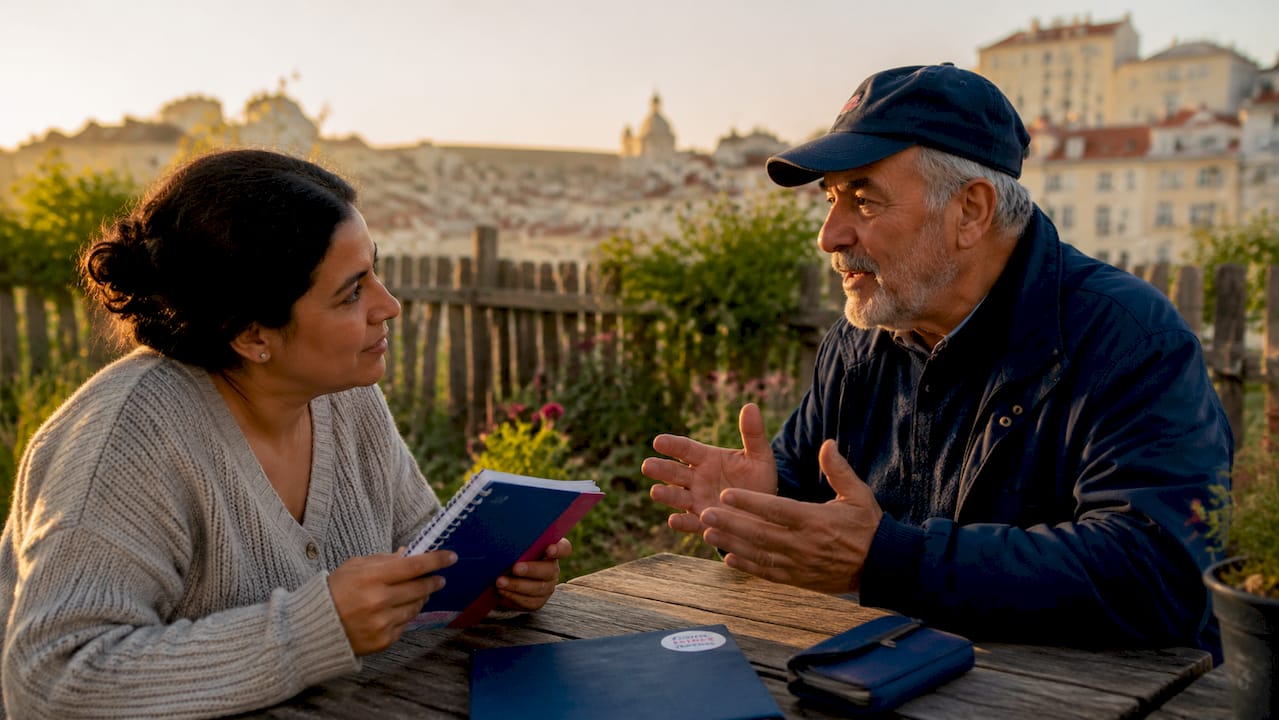
Spain has four co-official languages: Castilian Spanish, Catalan, Galician, and Basque. If you settle in Catalonia, the Basque Country, or Galicia, learning the regional language alongside Castilian opens additional social doors. The Spanish government allocates funding specifically for language learning programs, and the 2026 Integration and Citizenship Plan dedicates €30 million to language acquisition alone.
Most newcomers reach functional conversational Spanish within 12–24 months of immersive study. Immersion means more than classes. It means shopping locally, joining a neighborhood association, watching Spanish television, and resisting the pull of expat-only social circles.
- Enroll in a government-funded Spanish language course through your local town hall (ayuntamiento) as soon as you register as a resident.
- Practice with neighbors, not just classmates. Informal conversation builds the social trust that formal study cannot.
- In bilingual regions, learn at least basic phrases in the co-official language. Locals notice and appreciate the effort.
- Use language exchange apps like Tandem or HelloTalk to supplement classroom learning with native speakers.
- Set a personal milestone: hold a full conversation about a local news topic within six months of arrival.
Pro Tip: Avoid settling exclusively into English-speaking expat communities during your first year. The social comfort is real, but it delays the language acquisition that determines your long-term integration success.
How does Spain's government support cultural integration as of 2026?
Spain's government launched a €505 million Integration and Citizenship Plan in 2026 built around 16 specific measures. This is the most significant national investment in migrant integration Spain has made in a generation. The plan organizes support into four clear pillars.
"Respecting the laws and official languages of Spain is not optional. It is the basic condition for becoming part of this community." — Prime Minister Pedro Sánchez, announcing the 2026 Integration and Citizenship Plan.
The plan's first pillar is migrant regularization. Nearly one million migrants have applied under the amnesty program, which addresses the large existing undocumented workforce and brings people into formal legal status. That regularization is the foundation everything else builds on.
| Plan pillar | Budget allocation | What it means for you |
|---|---|---|
| Migrant regularization (amnesty) | Not separately itemized | Legal status for existing undocumented residents |
| Decent work policies | €185 million | Labor protections and job placement support |
| Language and cultural knowledge | €30 million | Funded Spanish language courses and civic education |
| Access to rights and anti-discrimination | Remaining allocation | Removal of barriers to public services |
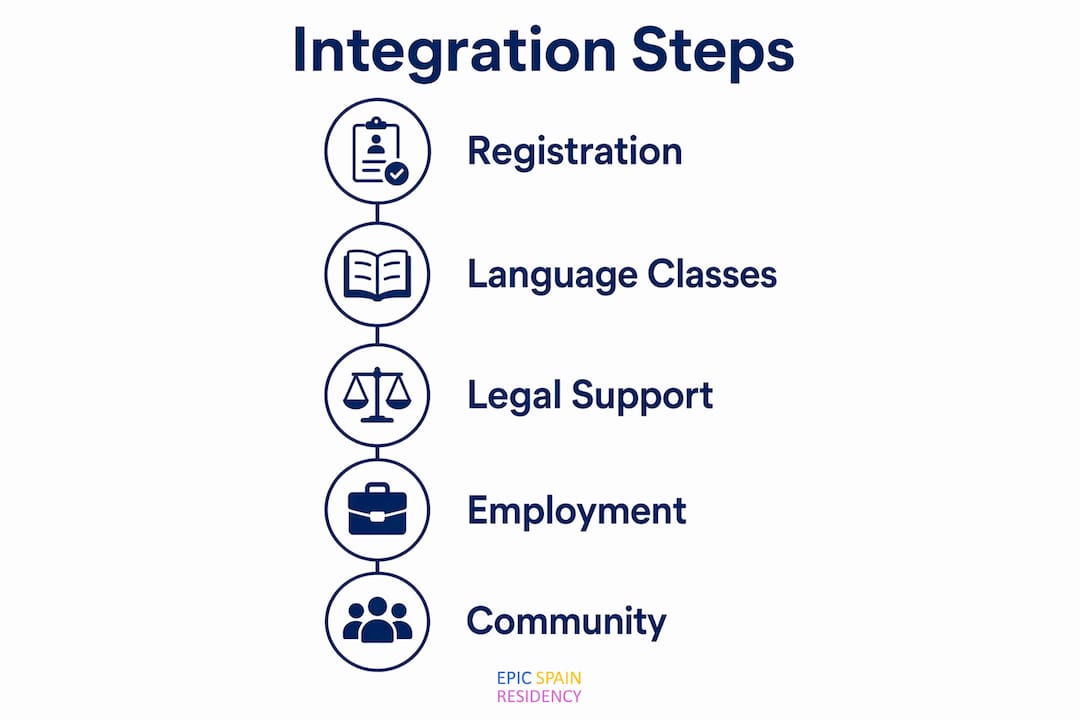
Spain does not impose formal nationwide civic integration tests, unlike Germany or the Netherlands. Instead, Prime Minister Sánchez frames integration as a two-way process built on rights and obligations. You gain access to public services and legal protections. In return, you respect Spanish law and engage with the language. That framing matters because it sets realistic expectations without bureaucratic hurdles like mandatory exams.
What social and cultural expectations shape integration experiences in Spain?
Social expectations in Spain are clear and worth understanding before you arrive. A survey by Fundación SM published in april 2026 found that 72% of Spanish youth aged 15–29 believe migrants should adapt to Spanish customs. That majority view reflects a broader social norm: participation in local life is not optional if you want genuine belonging.
What does adaptation look like in practice? It does not mean abandoning your identity. The distinction between assimilation and biculturalism is critical here. Assimilation means replacing your original culture with Spanish culture. Biculturalism means adding Spanish culture alongside your own. Biculturalism is the most effective long-term strategy, especially in cosmopolitan cities like Barcelona and Madrid where dual cultural identities are socially accepted.
Here is what active participation looks like on the ground:
- Attend local festivals such as La Feria, Las Fallas, or your town's patron saint celebration. These are not tourist events. They are the social fabric of Spanish community life.
- Join a neighborhood sports club or recreational league. Football clubs in particular function as social integration hubs across every income level.
- Participate in your local residents' association. These groups handle everything from neighborhood improvement to local political advocacy.
- Volunteer with a local charity or cultural organization. Volunteering builds trust faster than almost any other social activity.
- Learn the unwritten rules of Spanish social timing: lunch runs from 2:00 PM to 4:00 PM, dinner rarely starts before 9:00 PM, and Sunday is genuinely family time.
The social "in-group" dynamic in Spain is real. Spanish social circles tend to be tight and long-established. Breaking in takes time and consistent presence. Newcomers who show up repeatedly to the same spaces earn trust gradually. Those who cycle through different social environments rarely build the depth of connection that makes integration feel complete.
How do regional differences and local initiatives influence cultural integration?
Spain's integration governance is decentralized across national, autonomous, and local levels. That structure creates significant variation in what support looks like depending on where you live. Madrid and Barcelona have large, established immigrant communities and well-developed support networks. Rural Andalusia or inland Castile offer a very different experience, with fewer formal resources but often stronger informal community ties.
| Region | Integration context | Key resource type |
|---|---|---|
| Catalonia | Large immigrant population, bilingual environment | Language schools, civil society organizations |
| Madrid | Diverse gateway city, strong labor market | Municipal integration offices, job placement programs |
| Andalusia | Growing immigrant presence, varied municipal capacity | Local NGOs, agricultural community networks |
| Basque Country | Strong regional identity, funded integration programs | Regional government language and work programs |
There is no national one-stop-shop for integration support. Success requires navigating municipal offices and community organizations at the local level. Your town hall is the starting point for almost everything: resident registration (empadronamiento), access to public health, school enrollment, and language course referrals. Understanding Spain's regional residency rules helps you know which level of government controls which services.
Sport-based initiatives have become one of the most effective integration tools in Spain's decentralized system. Local football clubs and leisure leagues provide peer bonding, identity negotiation, and symbolic recognition for migrants in ways that formal programs often cannot. Spain's approach is pragmatic and localized rather than ideologically uniform. That is both a strength and a challenge.
Pro Tip: Register at your local town hall (empadronamiento) within the first two weeks of arrival. That registration unlocks access to public health, schools, and language programs. Without it, you are invisible to the local support system.
What practical strategies can newcomers use to achieve cultural integration in Spain?
Successful integration in Spain follows a recognizable pattern among long-term residents. Biculturalism sits at the center of that pattern: keeping your heritage culture alive while genuinely engaging with Spanish customs, not performing engagement for social approval.
- Prioritize language first. Every other integration goal becomes easier once you can communicate confidently in Spanish. Set a study schedule and protect it.
- Engage with legal obligations early. Understanding your residency permit categories and renewing on time removes the legal anxiety that undermines social confidence.
- Build local, not expat, social networks. Expat communities provide comfort but slow integration. Aim for a social circle that is at least half Spanish nationals within your first two years.
- Participate in recurring community events. One-time attendance does not build relationships. Showing up to the same market, club, or event every week does.
- Maintain your heritage culture actively. Cook your traditional food, celebrate your own holidays, and share your background with Spanish friends. Biculturalism works in both directions.
Spain does not require you to pass a cultural test. The obligation is behavioral: respect the law, engage with the language, and participate in civic life. Families relocating together have an advantage because children integrate through school rapidly and often become the family's fastest language learners.
Key Takeaways
Cultural integration in Spain succeeds through language proficiency, bicultural identity, active community participation, and engagement with the decentralized local support system.
| Point | Details |
|---|---|
| Language is the foundation | Immersive Spanish learning over 12–24 months drives social trust and job access more than any other factor. |
| Government support is real and funded | The 2026 Integration and Citizenship Plan allocates €505 million across language, work, and rights programs. |
| Biculturalism beats assimilation | Maintaining heritage culture while adopting Spanish customs produces better long-term social belonging than full assimilation. |
| Integration is decentralized | Outcomes vary significantly by region; your town hall is the first and most important local resource. |
| Social participation is non-negotiable | Joining local clubs, festivals, and community groups is how social trust is built in Spain. |
What I've learned about Spain's integration system after years of watching it up close
Spain's integration system frustrates newcomers who expect a clear, centralized process. There is no single office, no national checklist, no guaranteed pathway from arrival to belonging. That fragmentation is real, and pretending otherwise does not help anyone.
What I have observed is that the people who integrate most successfully treat language as a non-negotiable priority from day one, not something to get around to eventually. They also resist the temptation to measure integration by how Spanish they feel. Biculturalism is not a compromise. It is the most honest and sustainable way to live between two cultures.
The 2026 government plan is genuinely significant. €505 million and 16 concrete measures signal that Spain is taking integration seriously at the policy level. But policy does not replace the work of showing up to your neighborhood, learning the language, and building relationships one conversation at a time. The system will not come to you. You go to it, and you keep going.
Manage your expectations on timeline. Real social belonging in Spain takes two to four years for most newcomers. That is not a failure. That is how trust works in a culture built on long-term relationships.
— Living
How Epic-residency helps you build a legal foundation for life in Spain
Getting your visa and residency status right is the first step toward genuine integration. Without legal clarity, everything else sits on unstable ground.
Epic-residency specializes in helping non-EU individuals and families establish legal residency in Spain through pathways like the Non-Lucrative Visa, the Digital Nomad Visa, and partner residency routes. Each visa type carries specific obligations and renewal timelines that directly affect your integration trajectory. Epic-residency guides you through the application process, document preparation, and long-term residency planning so that your legal status supports your life in Spain rather than complicating it. Families relocating together can also get support through education services and family reunification pathways.
FAQ
What is cultural integration in Spain?
Cultural integration in Spain is the process of adopting Spanish language, civic norms, and social customs while maintaining your heritage identity. The Spanish government frames it as a two-way process built on rights and obligations rather than a one-sided assimilation requirement.
Does Spain require immigrants to pass a cultural integration test?
Spain does not impose a formal nationwide civic integration test. The government expects newcomers to respect Spanish law and engage with the official language, but there is no mandatory exam like those required in some other European countries.
How long does cultural integration in Spain typically take?
Most newcomers reach functional social integration within two to four years, with language proficiency being the primary driver of that timeline. Immersive Spanish learning over the first 12–24 months significantly accelerates the process.
What government support is available for cultural integration in Spain in 2026?
The 2026 Integration and Citizenship Plan provides €505 million in support across language learning, decent work policies, and access to public services. The plan includes €30 million specifically for language courses and €185 million for labor market integration programs.
Is biculturalism accepted in Spain?
Biculturalism is widely accepted, particularly in major urban centers like Barcelona and Madrid. Research shows it is the most effective long-term integration strategy, allowing newcomers to maintain their heritage culture while building genuine participation in Spanish social life.