
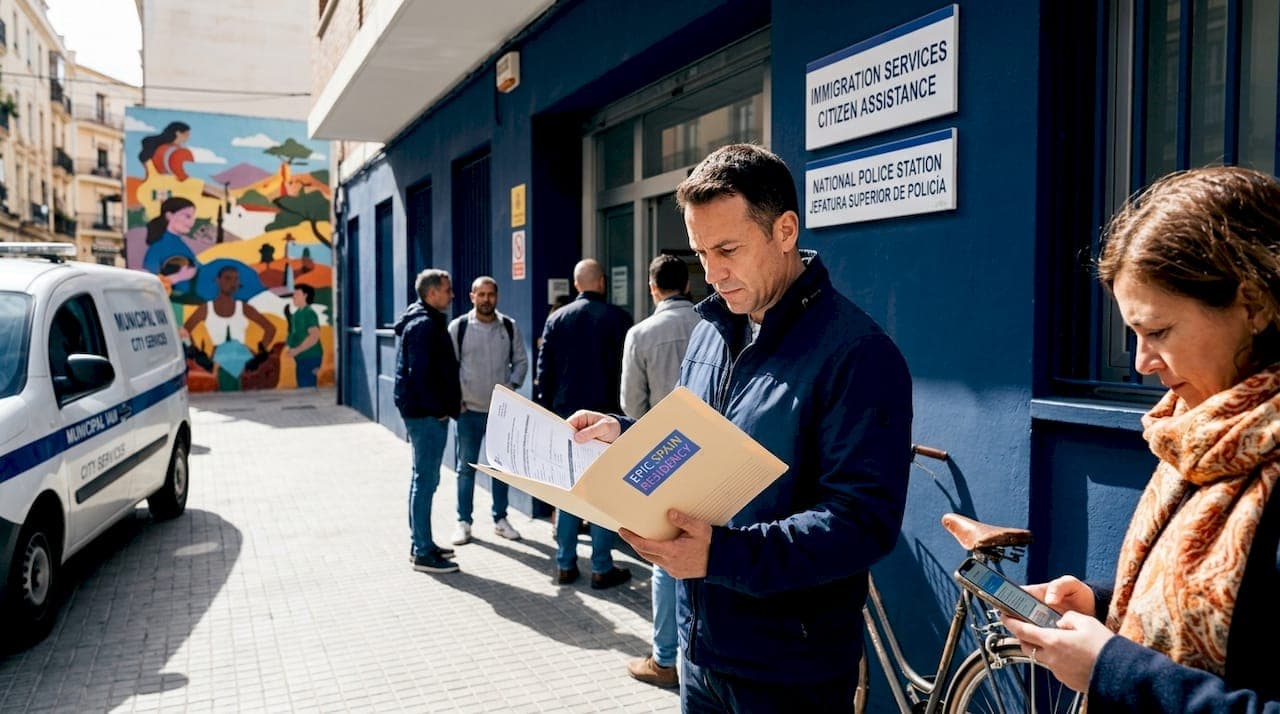
Moving to Spain requires more than just visa approval. The spain biometric appointment process, formally known as toma de huellas (fingerprint registration), is a multi-stage procedure that catches many applicants off guard. What most people assume is one quick trip to a police station turns out to involve multiple appointments, separate wait periods, and a stack of paperwork that must be exactly right the first time. Understanding the full sequence before you arrive in Spain can save you weeks of stress and keep your legal status secure.
Table of Contents
- Key Takeaways
- The Spain biometric appointment process explained
- How to book your biometric appointment in Spain
- What to expect for wait times and card collection
- Documents to bring to your biometric appointment
- Navigating delays and complications
- My honest take on this process
- How Epic-residency takes the guesswork out of this
- FAQ
Key Takeaways
| Point | Details |
|---|---|
| Biometrics follow approval | You cannot book your fingerprint appointment until your residence authorization is officially approved. |
| Two separate appointments | One appointment captures your fingerprints; a second appointment is required to collect the physical TIE card. |
| Wait times vary widely | Expect 1 to 3 weeks in smaller provinces and 8 to 14 weeks in Madrid or Barcelona. |
| Prepare documents in advance | Passport originals, tasa receipts, EX-17 form, and empadronamiento are all required on the day. |
| Act immediately after approval | Slots fill within seconds of release; monitor the booking portal the moment your resolution arrives. |
The Spain biometric appointment process explained
Many applicants make the mistake of trying to jump ahead. As a point of clarification, attempting biometrics before approval leads directly to rejection at the window. The system will not process your fingerprints without a confirmed residence authorization on file.
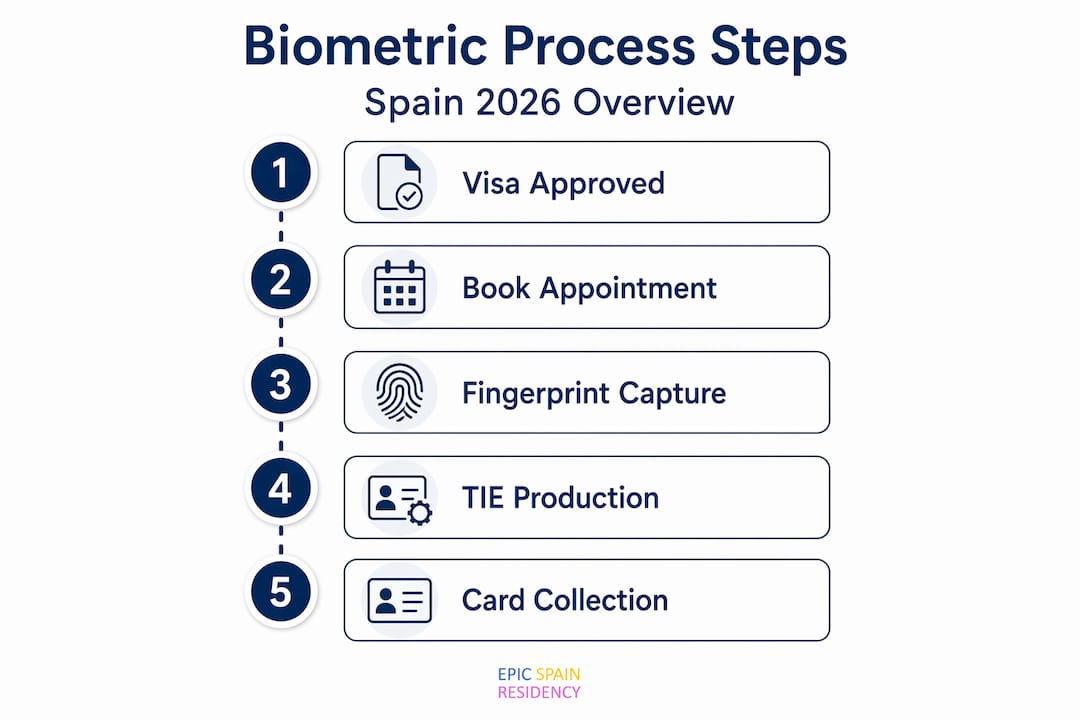
Here is the correct sequence for the full biometric residency process in Spain:
- Visa approval and entry into Spain. Your consulate approves your long-stay visa. You enter Spain on that visa, which is your legal basis for being in the country.
- Residence authorization resolution. The relevant immigration office issues a resolución favorable (favorable resolution) confirming your residency status.
- One-month deadline begins. Visa holders staying over six months must apply for the TIE card within one month of entering Spain or of receiving their resolution notification.
- Biometric appointment (toma de huellas). You attend an appointment at the Extranjería or designated National Police station. Fingerprints and a digital photo are captured.
- Card manufacturing period. The physical TIE card is produced. This typically takes 30 to 45 days, sometimes up to 60 days depending on the province.
- TIE card collection appointment. A second appointment is required to collect the card in person. You receive an SMS notification when it is ready.
The distinction between fingerprint capture and card collection trips many families up. Appointment shortages affect both stages, not just the initial fingerprint booking. Planning for both is non-negotiable.
How to book your biometric appointment in Spain
The official booking platform is the Spanish government's ICPPlus system, accessed through the Sede Electrónica. There is no shortcut or alternative official channel.
Here is the step-by-step booking process:
- Go to the ICPPlus portal. Navigate to the official cita previa system. Select your province from the list provided.
- Choose the correct trámite. Select the option for Toma de Huellas (Expedición de Tarjeta) or the relevant biometric procedure for your visa type.
- Enter your personal data. Input your NIE (Número de Identificación de Extranjero), passport number, and other identifying information.
- Select a date and time. If slots are available, choose your preferred appointment. Confirm the booking and save your confirmation number.
- Pay the required tasa before attending. The tasa must be paid before the appointment, not on the day at the office.
The challenge is step four. Slots are snapped up within seconds of being released, and the release schedule is unpredictable. The portal does not announce when new slots will appear. Refreshing manually at different times of day, particularly early mornings, can increase your chances. Third-party alert services exist that notify users when new slots become available, though you should vet any service carefully before sharing personal data.
Pro Tip: Never pay any unofficial service that claims to guarantee a biometric appointment. These services operate outside the legal framework, and at best you lose money. At worst, your personal data is compromised. Use only the official ICPPlus platform.
One practical option many applicants overlook: appointments in nearby provinces may sometimes be accepted, depending on your specific visa type and circumstances. This is worth a direct inquiry to your local Extranjería office if your registered province has extremely long delays.
What to expect for wait times and card collection
Realistic expectations here can make a real difference in your relocation planning. Wait times reflect two stages: the gap between seeking an appointment and securing one, and the manufacturing period for the physical card once biometrics are captured.
| Province type | Biometric slot wait | TIE card production | Total estimate |
|---|---|---|---|
| Smaller provinces | 1 to 3 weeks | 30 to 45 days | 6 to 10 weeks |
| Mid-size provinces | 3 to 6 weeks | 30 to 45 days | 9 to 14 weeks |
| Madrid / Barcelona | 8 to 14 weeks | Up to 60 days | 16 to 24 weeks |
| Mallorca | Approximately 4 weeks | 30 to 45 days | 8 to 12 weeks |
The fingerprint appointment itself is fast. Most applicants are in and out of the police station in 5 to 15 minutes. The bureaucratic weight is in the waiting, not the procedure.

After the appointment, the physical TIE card is ready in 30 to 45 days in most cases, though some provinces extend this to 60 days. You will receive an SMS when it is ready for collection. Do not show up before receiving that message.
Pro Tip: If you need to travel outside Spain while your TIE card is being processed, you are not automatically stranded. Apply for an autorización de regreso at your local Extranjería. Carry your fingerprint resguardo (receipt) and the return authorization together, and you can legally re-enter Spain while your card is still pending.
Documents to bring to your biometric appointment
Arriving unprepared is the single most avoidable reason appointments fail. Staff will turn you away if documentation is incomplete, and you will need to rebook from scratch. Given how tight slots are, that is a significant setback.
Bring the following on your appointment day:
- Passport. Original plus at least two photocopies of the photo page and any relevant visa pages.
- Favorable resolution letter. The official authorization letter from the immigration authority confirming your approved residency.
- Tasa 790 payment receipts. Proof of payment for the required government fees (Modelo 790 Código 012 or the applicable code for your visa type).
- Completed EX-17 form. This form formally requests the TIE card and must be completed and signed before your appointment.
- Empadronamiento certificate. Proof of your registered address in Spain. This document must reflect your current address and should be recent.
- Passport-size photographs. Typically three recent photos with a white background. Check current specifications as requirements can vary slightly by office.
- Medical insurance documentation. Required for certain visa types, particularly the Non-Lucrative Visa and Digital Nomad Visa.
At the appointment, a staff member will scan your fingerprints, capture a digital photograph, and verify all submitted documents against the original application. The process is quick but thorough. Any mismatch between what you submit and what appears in the system can cause the trámite to be denied on the spot.
Navigating delays and complications
Booking delays result from both genuine system capacity limits and automated bots competing for available slots. This is not unique to Spain's immigration system, but it makes life harder for applicants who are already managing a major international move.
Here is how to protect yourself when things do not go smoothly:
- Keep every confirmation and receipt. Your appointment confirmation email, tasa payment receipts, and the resguardo from your biometric appointment all serve as proof of active application status. You may need these if your legal status is ever questioned.
- Do not wait to start monitoring. Monitor the portal immediately after receiving your resolution. Every day of delay in starting the search adds to your overall timeline.
- Coordinate family appointments together. If you are applying for your whole family, check whether your province allows group booking or simultaneous slots. Not all offices do this, so call ahead to confirm the process.
- Know your legal extensions. If appointment scarcity pushes you past your one-month deadline, this is a recognized systemic problem. Authorities generally handle these cases with understanding, but you must have documentation proving you tried to book early.
- Understand your options if rejected at the window. A documentation error on the day does not mean your residency application fails. It means you need to correct the issue, rebook, and return. Use the time to get legal advice if the error is complex.
"Legal requirements mandate timely biometric registration; however, enforcement is sympathetic in cases of appointment shortages. The advice is to book at the earliest possible opportunity and document every attempt." Source
For detailed context on how visa denials and complications interact with the broader application process, it is worth reviewing what immigration authorities flag as incomplete before you submit anything.
My honest take on this process
I have worked with enough families moving to Spain to say this clearly: the fingerprint appointment is the most underestimated step in the entire residency process. People spend months getting their visa application right and then treat the biometric step as a formality. It is not.
In my experience, the applicants who have the smoothest relocations are the ones who start monitoring the appointment portal the same day they get their resolution. Not the next week. The same day. I have seen slots appear at 7 a.m. on a Tuesday and disappear before 7:02. That is not an exaggeration.
What I have also learned is that people often underestimate the psychological weight of the waiting period. Sitting in Spain with an approved visa but no TIE card, watching the weeks pass, is genuinely stressful. It helps to know in advance that this gap is normal, legal, and manageable with the right documentation in hand. The visa processing timeline is something every applicant should map out before they book their flight, not after they land.
The other thing I would push back on is the idea that paying someone to "get" you an appointment is a smart workaround. It is not. It adds financial risk, legal ambiguity, and in some cases, data risk. The official system is frustrating, but it is the only safe path.
Build buffer time into your relocation plan. If you think the card will arrive in six weeks, plan for twelve. That mindset protects you.
— Living
How Epic-residency takes the guesswork out of this
The Spain biometric appointment process is manageable, but only if you know exactly what to expect and when to act. Epic-residency works with non-EU individuals and families through every stage of the Spain visa and residency journey, from initial application through to TIE card collection.
Whether you are applying for the Non-Lucrative Visa, the Digital Nomad Visa, or a Partner Visa, the Epic-residency team prepares your documentation, monitors appointment availability, and helps you avoid the costly mistakes that come from navigating this process alone. The consultancy's Spain-focused expertise means you get specific, accurate guidance rather than generic immigration advice.
If you are planning a relocation and want someone experienced on your side from day one, explore what Epic-residency offers and find out how the right support changes the entire experience.
FAQ
What is the toma de huellas appointment in Spain?
The toma de huellas is Spain's official biometric fingerprint appointment, required for non-EU residents to obtain their TIE residency card. It takes place at a designated National Police station after your residence authorization has been approved.
Can I book my biometric appointment before my visa is approved?
No. Attempting biometrics before receiving a favorable residence resolution leads to rejection at the appointment window. The system requires an approved authorization to process your fingerprints.
How long does it take to get the TIE card after the biometric appointment?
The physical TIE card is typically ready 30 to 45 days after the biometric appointment, with some provinces taking up to 60 days. You receive an SMS notification when it is ready for collection at a second appointment.
What happens if I cannot get a biometric appointment within one month of entering Spain?
Authorities recognize that appointment shortages are a systemic issue. Document every booking attempt and keep all confirmation records. Enforcement is generally sympathetic, but you must demonstrate that you tried to book promptly.
Can I travel outside Spain before my TIE card arrives?
Yes, but you need an autorización de regreso from your local Extranjería office. Carry this alongside your biometric resguardo to legally re-enter Spain while your card is being processed.