
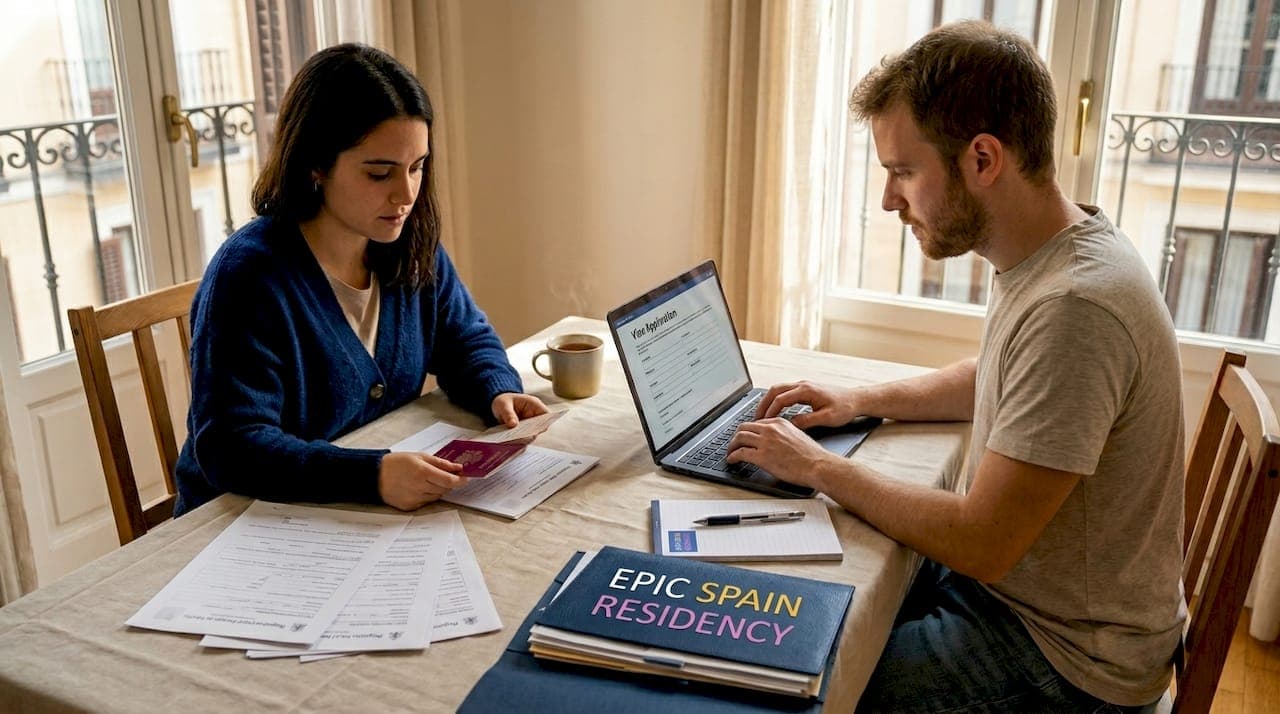
A pareja de hecho is a legally recognized civil partnership in Spain that grants cohabiting couples official status, inheritance protections, and access to social benefits. Unlike marriage, registration happens at the autonomous community level, not through a single national system. This means the Spain pareja de hecho requirements you must meet depend heavily on where in Spain you live. Whether you are a couple from Hong Kong, Singapore, the UK, or anywhere outside the EU, understanding the regional rules before you collect a single document is the single most important step you can take.
1. What documents are required for pareja de hecho registration?
The core document list for registering a pareja de hecho in Spain is consistent across most regions, though document standards differ significantly by autonomous community. Preparing the wrong format or missing a certificate is the most common reason applications are delayed or rejected.
The standard documents required include:
- Valid identity documents for both partners: passport, DNI (for Spanish nationals), or NIE (for foreign residents)
- Certificate of civil status (certificado de soltería or fe de soltería), confirming neither partner is currently married
- Empadronamiento certificate (padrón municipal), proving shared residence at the same address
- Cohabitation declaration, either a notarized affidavit or an official form depending on the region
- Divorce decree or annulment certificate if either partner was previously married
- Certificate confirming no existing pareja de hecho registration in any other community
For non-EU partners, documents issued abroad must typically be apostilled under the Hague Convention and accompanied by a certified Spanish translation. A lease contract or utility bills in both names can strengthen your cohabitation proof, particularly in communities that request supplementary evidence.
Pro Tip: Request the official document checklist directly from your autonomous community's civil registry or ayuntamiento before gathering anything. Formats, notarization requirements, and acceptable translations vary enough between regions that a generic list can lead you astray.
2. How regional differences affect registration requirements
Spain has no single national pareja de hecho register. Each of the 17 autonomous communities manages its own system, and the practical differences between them are significant enough to change your entire preparation strategy.
| Community | Has Official Register | Key Requirement Notes |
|---|---|---|
| Madrid | Yes | Empadronamiento required; standard document set |
| Catalonia | Yes | Minimum 2 years cohabitation in some cases |
| Valencia | Yes | Official register; shared padrón mandatory |
| Andalucía | No | Notarial deed (escritura pública) required instead |
| Castilla-La Mancha | No | Evidence-based proof; no formal register |
| Murcia | Yes | 2-year cohabitation requirement enforced |
Communities without a formal register, such as Andalucía and Castilla-La Mancha, require couples to formalize their partnership through a notarized public deed. This route is legally valid and produces a recognized document, but it costs more and takes longer than a standard registry application. The practical impact is real: a couple registering in Madrid gains access to regional inheritance protections and hospital visitation rights that may not automatically transfer if they later move to a community with different rules.
Pro Tip: If you are planning to move between communities, register in the community where you intend to settle long-term. Rights linked to your pareja de hecho are often tied to the registering region, not your current address.
3. Legal eligibility criteria, including for foreign and separated partners
The legal eligibility rules for a pareja de hecho are stricter than many couples expect. Meeting these criteria before you apply prevents the most costly delays.
The core eligibility requirements are:
- Neither partner can be currently married. Legal separation does not dissolve a marriage. Separated persons generally cannot register as pareja de hecho in most communities; full divorce or annulment is required.
- Neither partner can already be registered in another pareja de hecho. You must formally dissolve any prior registration before applying.
- Both partners must be adults and must not be related by blood or adoption within the degrees prohibited by law.
- Stable cohabitation must be demonstrable. Most communities require proof of shared residence, typically through the padrón municipal.
For foreign partners, including those from Hong Kong, Singapore, or other non-EU countries, the eligibility rules are the same, but the documentation burden is higher. Non-EU partner residence applications linked to pareja de hecho require municipal padrón registration and documentary proof of a stable couple relationship. Your NIE must be active, and any foreign civil status documents must be apostilled and translated.
The separated-but-not-divorced situation catches many couples off guard. Spain's legal system treats separation and divorce as entirely distinct statuses. If one partner is legally separated but not yet divorced, the application will be rejected in most communities. Clarifying this before you apply saves weeks of wasted effort.
4. What happens if you do not register as pareja de hecho
Skipping formal registration carries consequences that only become visible years later, often at the worst possible moment.
The most serious consequence involves widow's pension rights. Under LGSS Article 221, a pareja de hecho must be registered or constituted by public document at least two years before the death of a partner, with stable cohabitation of five years or the presence of common children. This is a dual requirement, not a choice between options.
In 2026, the Spanish Supreme Court ruled that 20+ years of cohabitation and common children are not sufficient to claim a widow's pension without formal pareja de hecho registration. The ruling makes clear that courts will not substitute long cohabitation for the legal act of registration.
Beyond pensions, unregistered couples face limitations on inheritance rights, hospital visitation and medical decision-making authority, housing protections under tenancy law, and access to certain regional social benefits. A registered pareja de hecho does not carry the same automatic legal weight as marriage across all areas of Spanish law, but it provides protections that an unregistered relationship cannot access at all.
5. Registration process timeline and practical tips
The typical resolution timeline after submitting a pareja de hecho application runs from 15 to 30 business days, though regional workload and document completeness both affect the actual wait.
The application process follows these steps:
- Verify your community's registration system. Confirm whether your autonomous community has an official register or requires a notarial deed.
- Complete municipal empadronamiento. Both partners must be registered at the same address in the padrón. Do this as early as possible since some communities require a minimum period of shared registration.
- Gather and authenticate all documents. Foreign documents need apostilles and certified translations. Spanish civil status certificates must be recent, typically issued within three months.
- Submit your application. Depending on the community, this is done in person at the civil registry, online through the community's electronic portal, or by certified mail.
- Await resolution and collect your certificate. Once approved, you receive an official registration certificate. Keep multiple certified copies.
| Step | Estimated Time | Notes |
|---|---|---|
| Empadronamiento registration | 1 to 4 weeks | Must precede application in most communities |
| Document gathering and apostille | 2 to 6 weeks | Foreign documents take longer |
| Application review | 15 to 30 business days | Varies by community workload |
| Certificate issuance | 1 to 2 weeks after approval | Request certified copies immediately |
Pro Tip: Build your cohabitation documentary trail from day one. Shared lease contracts, joint utility bills, and bank correspondence at the same address all serve double duty: they support your pareja de hecho application and strengthen any future residence card application for a non-EU partner.
6. Pareja de hecho vs. marriage visa: understanding the residency difference
The pareja de hecho vs. marriage visa distinction matters enormously for non-EU couples, including those from Hong Kong and Singapore. Marriage to a Spanish or EU citizen triggers a specific family reunification route with its own documentation and processing pathway. A pareja de hecho with a Spanish or EU citizen creates a comparable but procedurally distinct route to a partner visa in Spain.
The key difference is evidentiary. Marriage is proven by a single certificate. A pareja de hecho requires proof of registration, cohabitation, and in some cases a minimum duration of the relationship. For non-EU partners, the residence card application built on pareja de hecho status requires the official registration certificate plus supporting cohabitation evidence. The rights granted are broadly similar to those of a married spouse, but the documentation burden is higher and the process is more sensitive to regional variation.
Couples from outside the EU who are not yet in Spain should also consider whether a Non-Lucrative Visa or another entry pathway is needed before the pareja de hecho registration can be completed. Registration requires physical presence and padrón registration in Spain. You cannot complete it remotely.
Key takeaways
Successful pareja de hecho registration in Spain requires region-specific document preparation, confirmed legal eligibility, and early municipal registration to protect future benefit rights.
| Point | Details |
|---|---|
| No national register exists | Each autonomous community runs its own system; verify local rules before collecting documents. |
| Separation is not divorce | Legally separated partners cannot register in most communities; full divorce is required. |
| Registration timing is legally critical | Courts require registration at least 2 years before a partner's death for widow's pension eligibility. |
| Foreign partners need extra documentation | Non-EU partners must apostille foreign documents and build a continuous cohabitation record. |
| Communities without registers use notarial deeds | Andalucía and Castilla-La Mancha require a notarized public deed instead of a registry application. |
What I have learned from watching couples navigate this process
The single biggest mistake I see couples make is treating pareja de hecho registration as a formality they can handle whenever it feels convenient. The 2026 Tribunal Supremo ruling should change that thinking permanently. Courts are not interested in how long you have lived together or whether you have children. They look at the registration date. That date is a legal timestamp with real financial consequences.
The second pattern I notice consistently is underestimating regional variation. Couples who research the process online often find general information that applies to Madrid or Catalonia, then discover their community in Andalucía or Murcia operates entirely differently. The time lost correcting that assumption is avoidable.
For couples from Hong Kong, Singapore, or other non-EU countries, I would add one more caution: do not wait until you are already in Spain to start gathering foreign civil status documents. Apostille processes and certified translations take time, and some countries have backlogs that stretch weeks. Start that process before you book your flight.
Early registration is not just paperwork. It is risk management. The date on your certificate may matter more than anything else in your file, years from now, in a situation you cannot currently predict.
— Epic-residency
How Epic-residency supports your pareja de hecho registration
Epic-residency specializes in guiding non-EU couples through every stage of the pareja de hecho process, from verifying regional requirements to preparing apostilled documents and submitting applications. For couples from Hong Kong, Singapore, and beyond, the team handles certified translations, padrón registration strategy, and the residence card application that follows successful registration. If your situation involves a previously married partner, a community without a formal register, or a non-EU national applying for a partner residence card, professional guidance removes the guesswork and prevents the document errors that cause rejections. Epic-residency also supports couples exploring the Non-Lucrative Visa as an entry pathway before registration.
FAQ
What are the basic eligibility rules for pareja de hecho in Spain?
Both partners must be adults, not currently married, and not already registered in another pareja de hecho. Stable cohabitation must be demonstrable through shared municipal registration.
Can a non-EU partner register as pareja de hecho in Spain?
Yes. Non-EU partners can register, but foreign civil status documents must be apostilled and translated into Spanish. The registration also supports a subsequent residence card application.
Does legal separation allow pareja de hecho registration?
No. Separation does not dissolve marriage legally in Spain. Full divorce or annulment is required before either partner can register a pareja de hecho in most autonomous communities.
How long does pareja de hecho registration take in Spain?
Resolution typically takes 15 to 30 business days after a complete application is submitted, though timelines vary by community and document completeness.
Why does registration timing matter for pensions and benefits?
Under LGSS Article 221, the registration must predate a partner's death by at least two years for widow's pension eligibility. The 2026 Tribunal Supremo ruling confirmed that long cohabitation and common children cannot substitute for formal registration.